
Nobody at your carrier is checking your invoice against your contract before it goes out. That job, if it gets done at all, falls to you.
In most enterprises, it doesn't get done. The result is a steady, invisible drain on telecom spend that compounds monthly and rarely shows up as a line item anyone owns.
What is a telecom billing error?
A telecom billing error is any charge on a carrier invoice that does not match what was contracted. The category is broader than most finance teams expect.
Common types include:
-
Rate misapplication: charges applied at a rate other than the contracted rate, often because a new contract or amendment wasn't updated in the carrier's billing system
-
Taxes and surcharges applied to exempt services or locations
-
Services billed after disconnection, including circuits, lines, and features no longer in use
-
Duplicate charges for the same service across billing periods
-
Contract non-compliance: minimums calculated incorrectly, discounts not applied, SLA credits owed but not issued
None of these require fraud or bad faith to occur. Most happen because carrier billing systems are complex, contract change lag is real, and no one on the vendor side is auditing your invoice against your contract terms before it goes out.
Why carrier billing errors are more common than you'd expect
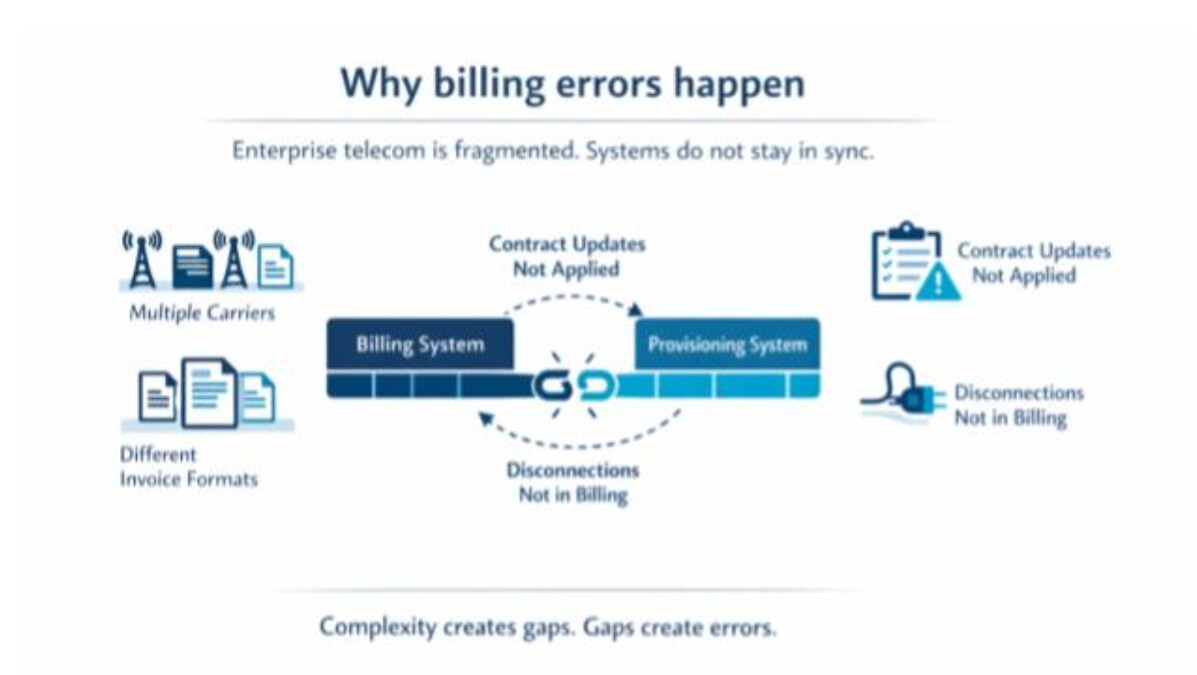
Enterprise telecom environments are not simple. A mid-size organization might have circuits, mobile lines, SIP trunks, SD-WAN services, and UCaaS connectivity spread across multiple carriers, dozens of locations, and several cost centers. Each carrier invoices differently. Formats vary. Reference codes don't match internal records.
That complexity makes errors almost inevitable. Carrier billing systems don't automatically apply contract amendments. When a service is disconnected, the disconnect request goes through provisioning, but the billing system update is a separate process, handled separately, with no guaranteed synchronization. Rate tables don't self-correct when a new contract goes live. Gartner estimates that 80% of telecom bill contain errors. Unchecked, these errors can inflate costs by 3-15%.
Why they go undetected
Most enterprises receive telecom invoices in incompatible formats across multiple carriers. Consolidating them into something auditable is manual work. Finance teams process them for payment. IT teams don't have visibility into what was contracted. Nobody is systematically checking line-by-line charges against contracted rates before payment clears.
Even organizations with dedicated telecom management resources tend to do this work reactively, after they get a flag from a business unit or notice a spike in spend. By that point, they've already paid three, six, sometimes twelve months of an incorrect charge.
What the financial exposure looks like
For an enterprise spending $1M annually on telecom, a 10% error rate is $100,000 per year in overbilling. Organizations running a first structured audit against contracted rates find errors in that range with regularity.
The exposure compounds in two ways. First, the obvious one: every month an error isn't caught is another month it gets paid. Second, the less obvious one: billing errors that go uncontested long enough become harder to dispute. Carriers have dispute windows. Some will negotiate recoveries on older billing periods; many won't.
The best time to catch a billing error is before payment. The second best time is within the first billing cycle after it appears. Most organizations catch them in neither window.
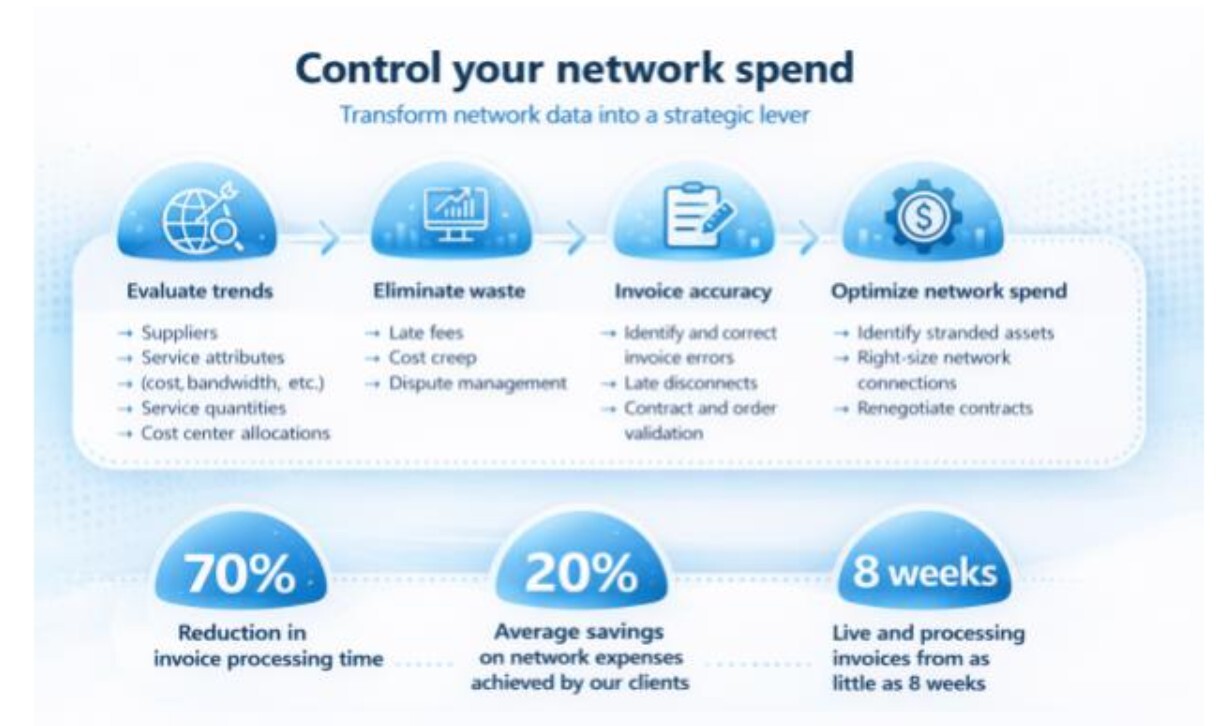
The impact of Pure IP’s Pure IP FinOps platform:
Why the annual review catches them too late
Some organizations schedule an annual telecom audit, usually as part of a broader IT or finance review. This is better than nothing. It's not a solution.
An annual review can recover some overbilling, surface some contract non-compliance, and produce a snapshot of what's wrong. What it can't do is prevent twelve months of incorrect charges from clearing before anyone looks. It also can't file disputes within carrier windows for errors that are now over a year old.
The math is straightforward. If you audit once a year and your billing error rate is 8%, you are paying that 8% for eleven months before catching it.
What monthly automated auditing catches instead
A monthly audit process, run against contracted rates before payment, changes the economics entirely.
When every invoice is checked against what was contracted, rate misapplication gets caught in the billing period it appears. Disconnected services that continue to appear on invoices get flagged before a second charge clears. Duplicate charges don't compound.
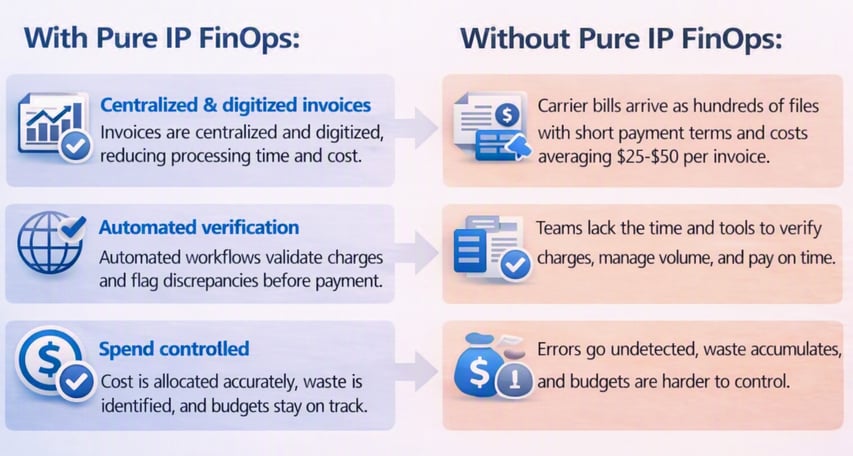
Pure IP FinOps audits every invoice against contracted rates every month. Errors that would otherwise sit undetected until a manual review surfaces them get caught in the billing cycle they appear.
How dispute resolution works without internal overhead
Catching a billing error and resolving it are two different things. Most organizations that do find billing errors don't have a structured process for disputing them with carriers. That work falls to IT or telecom managers who are already stretched, and it requires knowing which carrier contacts handle billing disputes, what documentation the carrier requires, and how to track the dispute to resolution.
Pure IP FinOps files disputes on the client's behalf. The client gets visibility into open disputes and their status. The resolution work doesn't land on internal teams.
For organizations with multiple carriers, that matters more than it might seem. Billing disputes with a carrier require someone who knows the carrier's dispute process. Doing that across five or six carriers simultaneously, while managing everything else, is work that rarely gets done well internally.
Frequently asked questions
How common are telecom billing errors in enterprise?
Gartner estimates that 80% of telecom invoices contain billing errors. Organizations running their first structured audit against contracted rates frequently find errors toward the higher end of that range, particularly where contracts have been renegotiated recently or where multiple carriers are involved.
What causes carrier invoice errors?
Most billing errors are not intentional. They result from contract changes that aren't reflected in carrier billing systems, disconnect orders that don't trigger billing updates, rate tables that don't self-correct when a new agreement goes live, and taxes or surcharges applied without checking for exemptions. No carrier billing system automatically audits its output against your contract terms.
How do I dispute a telecom invoice?
Disputing a carrier invoice requires identifying the specific charge in error, referencing the contracted terms that the charge violates, and submitting a dispute through the carrier's billing dispute process. Carriers have defined dispute windows, often 90–180 days from the invoice date, and requirements for supporting documentation vary by carrier. Organizations managing disputes across multiple carriers typically need a dedicated resource or a managed service to track and follow through on each one.
How much do telecom billing errors cost an enterprise?
At a 10% error rate on $1M in annual telecom spend, the exposure is $100,000 per year. Errors that go uncontested beyond carrier dispute windows may not be recoverable, making early detection significantly more valuable than a recovery audit run after the fact.
What is a telecom invoice audit?
A telecom invoice audit is a systematic review of carrier invoices against contracted rates, terms, and active service records. A monthly audit checks every invoice in the billing cycle it arrives. An annual audit reviews a full year of invoices, usually after payment has already cleared, limiting recovery options and missing dispute windows.
Ready to see what's on your invoices?
Pure IP FinOps audits every invoice against your contracted rates every month, before payment clears.